‘I Couldn’t Do It Without You’: Brevard County Cancer Patient Meets Nurse Navigator for the First Time
Emotional get-together highlights the impact of Health First's Oncology Nurse Navigator Program
As soon as Ken Mistele saw Jennifer Kennedy walking toward him, his eyes grew misty. When the patient and nurse finally embraced, Mistele simply said, “Thank you.”
“I can feel your heart,” Mistele, 64, of Indialantic told Kennedy, his oncology nurse navigator, as they sat and visited at Health First’s Holmes Regional Medical Center. “God put you in my path for a reason…You took a lot of pressure off. Thank you so much. Thank you. I couldn’t do it without you.”
While this was the first time the two met in person, they were far from strangers.
Since Mistele’s Stage 2 tongue cancer this spring, Kennedy has been a constant source of guidance by phone, helping him navigate challenges that extended well beyond his treatment plan, which included chemotherapy and 35 rounds of radiation.
At Health First, treatment is only one part of a patient’s cancer journey. Because people aren’t just worried about their diagnosis. They’re worried about everyday life and how to navigate it while undergoing treatment.
Kennedy – and the other nurse navigators – can help with that.
“It’s about trying to ease that anxiety that they have from the start,” she said.
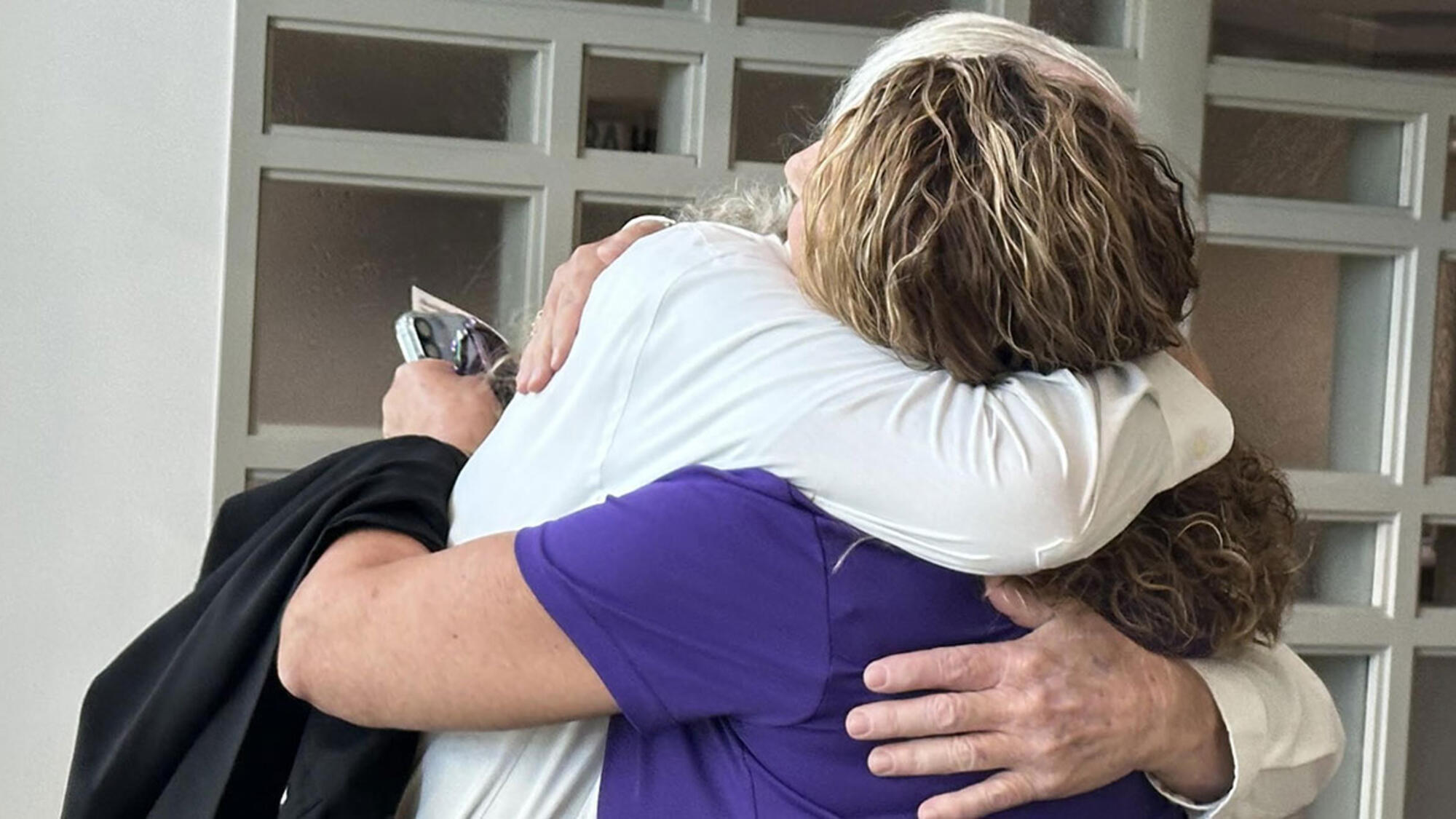
Ken Mistele hugs oncology nurse navigator Jennifer Kennedy Wednesday at Health First’s Holmes Regional Medical Center.
Oncology Nurse Navigators are an important part of care at the Health First Cancer Institute. Kennedy supports patients with gastrointestinal, head and neck, and pancreatic cancers.
Three other nurse navigators are part of the program, including breast, thoracic and genitourinary cancers.
Nurse navigators help patients connect with services throughout Health First’s Integrated Delivery Network – and even outside of it.
Navigators can refer patients to social workers, nutritionists, in-home care services and even financial resources.
“The great thing about this navigator role is being able to have the time to be able to do all that,” Kennedy said. “It’s nice to be able to contact these resources and take the time to get things accomplished in a timely manner so the patient can focus on themselves and the journey ahead without the added outside stressors that a cancer diagnosis can bring.”
A journey to peace of mind
For Mistele, Kennedy’s support has been instrumental during a difficult time. Speaking about once a week, she’s helped him get approval for in-home care after repeated insurance company denials, utility assistance resources and transportation, and found hands-free feeding tube support that allowed him to be more mobile.
“I think it’s alleviated a lot of stress for him,” Kennedy said.
When Mistele began his cancer journey, one fear ate at him nightly.
“I live alone,” Mistele, 64, of Indialantic said. “With having this in my throat, I was terrified that in the middle of the night, I’m going to choke out and not have anything to help me.”
When he shared that with Kennedy, her response? “I got you.”
Within days, Kennedy was able to get Mistele a discounted medical alert system that could summon help in an emergency.
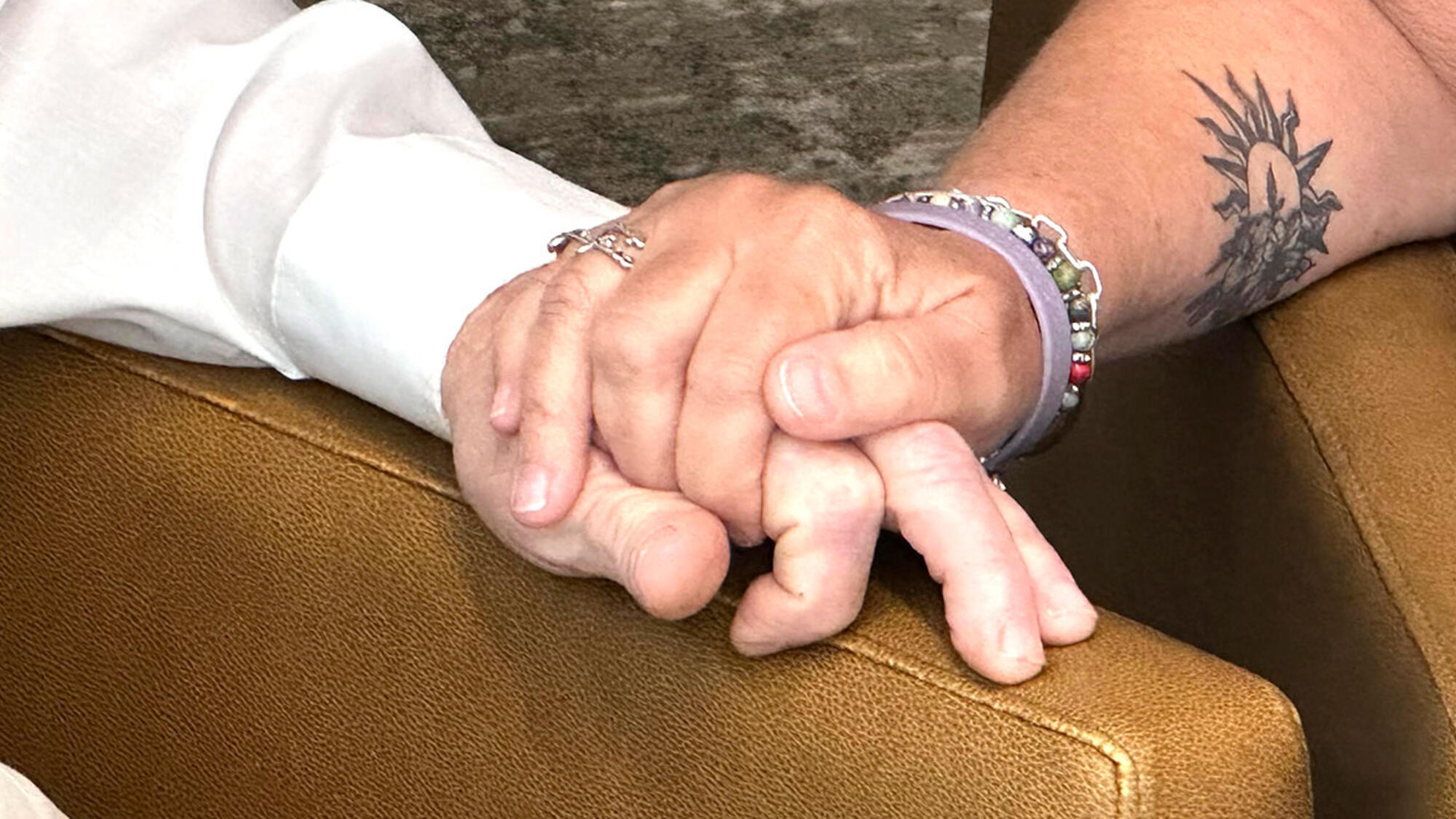
Jennifer Kennedy, whose hands are pictured with patient Ken Mistele’s, has been a constant source of guidance for Mistele by phone, helping him navigate challenges that extended well beyond his treatment plan.
“When Jennifer told me, ‘It’s going to be taken care of,’ just that knowing was enough to let me go to sleep,” Mistele said. “Anything I asked for, it was done, and I wouldn’t have to think about it,” Mistele said.
Helping treat more than cancer
Tracy Wagner, Clinical Director, Oncology Operations, said seeing Mistele and Kennedy interact reminds her of why the oncology nurse navigator program exists. Because when someone gets a cancer diagnosis, they tend to shut down and struggle to comprehend the information coming at them. Navigators, already familiar with the cancer care system, are a resource and source of guidance. Nurse navigators handle the work upfront, following the National Cancer Care Network (NCCN) as a blueprint for care.
“It’s the gift of time, spending one-on-one moments with patients,” Wagner said. “We don’t get as many of those as we should, and this program is an opportunity to do just that – spend time with people where they need it most. Meet them where they need to be.”
There have been nurse navigators for breast cancer patients; expanding it into other oncology specialties was something to continue to enhance the program, said Lindsay Jacques, Vice President, Oncology Operations.
“Our oncology patients touch every area of the system,” Jacques said.
She explained how this means patients navigate everything from imaging to lab to inpatient and outpatient services, as well as other specialties, which can be overwhelming.
“It’s an overall desire to take us to a being fully multidisciplinary cancer institute to provide all the services to the community that a cancer patient would need,” Jacques said.
For Mistele, having Kennedy as his nurse navigator has made all the difference.
She’s also been a source of strength for him, just like his strong faith in God. Mistele spoke about how when faced with cancer, it can be difficult for friends and family to process. He shared that he believes some people don’t know what to say or do when a loved one is diagnosed. He admits he often felt isolated in his small beachside apartment.
“You lose a lot of your friends,” Mistele said. “A person like Jennifer makes up for that. She’s got a big heart. She made things a lot easier for me, and I’m just glad she’s part of my life.”
Kennedy was grateful for the chance to meet Mistele.
“It’s really amazing to see this, because then we know the program is working from start to finish,” Kennedy said. “This is something that gives us satisfaction – that things that we’re doing are actually helping patients.”
Mistele told Kennedy he couldn’t have done it this past year if not for Kennedy’s support.
“You just made this journey,” Mistele said. “It’s not a pleasant journey, but you made it as pleasant as possible. Thank you so much.”
Kennedy told him he was welcome. And despite his treatment being finished, Mistele still knows he can count on her, leaving him with a heartfelt sentiment:
“I’ll still be watching out for you.”